Some journeys begin not from a place, but from the smallest detail. A sentence, a name… Sometimes from a single line printed on the back of a wine label. And sometimes, more than the wine itself, it is a detail on that label that stays with you.
I don’t know what a wine label means to you, but to me, it matters. Because a label is one of the clearest ways a wine producer expresses themselves. It often carries strong messages about what they value and where they stand. It is a small yet powerful space that offers clues about the origin of the wine, its production, and sometimes even a worldview. In short, by reading a wine label, you can form an impression of the person behind the wine. I have seen many times how a detail that seems insignificant can become a doorway into someone’s world.
Before going to Sicily, there was only one bottle on my mind. I knew the wine. But what truly intrigued me was a sentence on its back label. And the name beneath it: Mustafa Kemal Atatürk.
It was written in Italian as “Coloro che sono inclini al compromesso non potranno mai fare una rivoluzione.” Its familiar meaning in Turkish is: “İdare-i maslahatçılar esaslı inkılap yapamaz.” While not a literal translation, rendered into Turkish from Italian, it conveys the idea that “Those who are inclined to compromise cannot make a revolution.”
More than the wine itself, the presence of Mustafa Kemal Atatürk’s name on the back label of a small producer’s bottle, in the middle of the Mediterranean, in Sicily, deeply excited me. It was there. Fixed. Unchanged. And it was asking me a single question: Why? Why would a wine producer in Sicily place a quote by Mustafa Kemal Atatürk on their label? What thought had led them to that sentence? Did they simply like the quote, or did they find something of themselves within it?
When I arrived in Sicily, one of the first things I did was to track down Alessandro Viola. I walked into wine shops, asked questions, searched. The answers I received when I mentioned his name were usually the same: “He is hard to reach.”
But if you are someone driven by curiosity, you can imagine that this would not be enough to stop me. And if you happen to have a Capricorn stellium, giving up is hardly an option. Eventually, I managed to reach Alessandro Viola. He wasn’t available that day. He said we could come the next day. But that didn’t work for us; we had to cross the island from one end to the other. When I explained the situation, he simply said, “Come.”
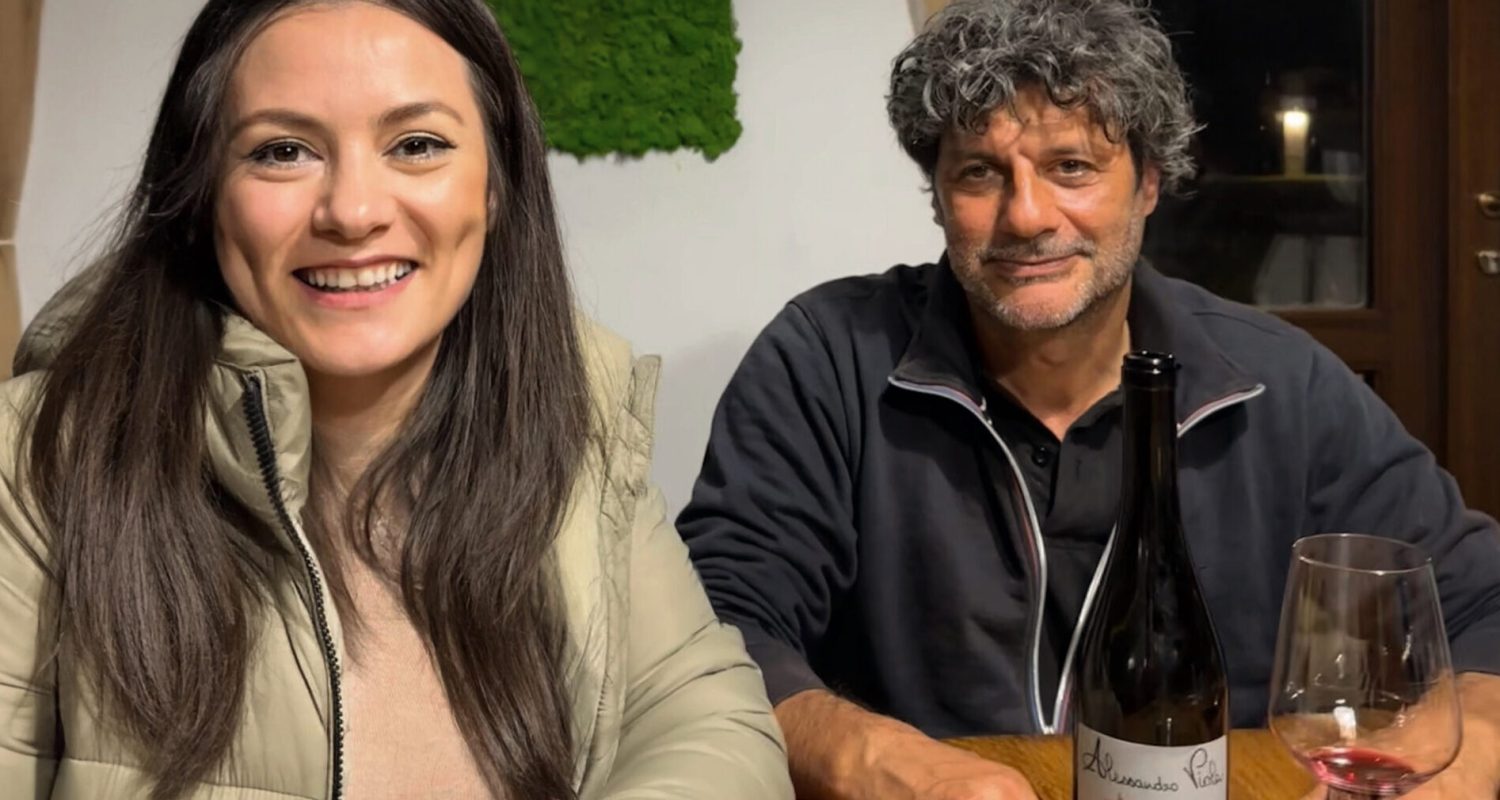
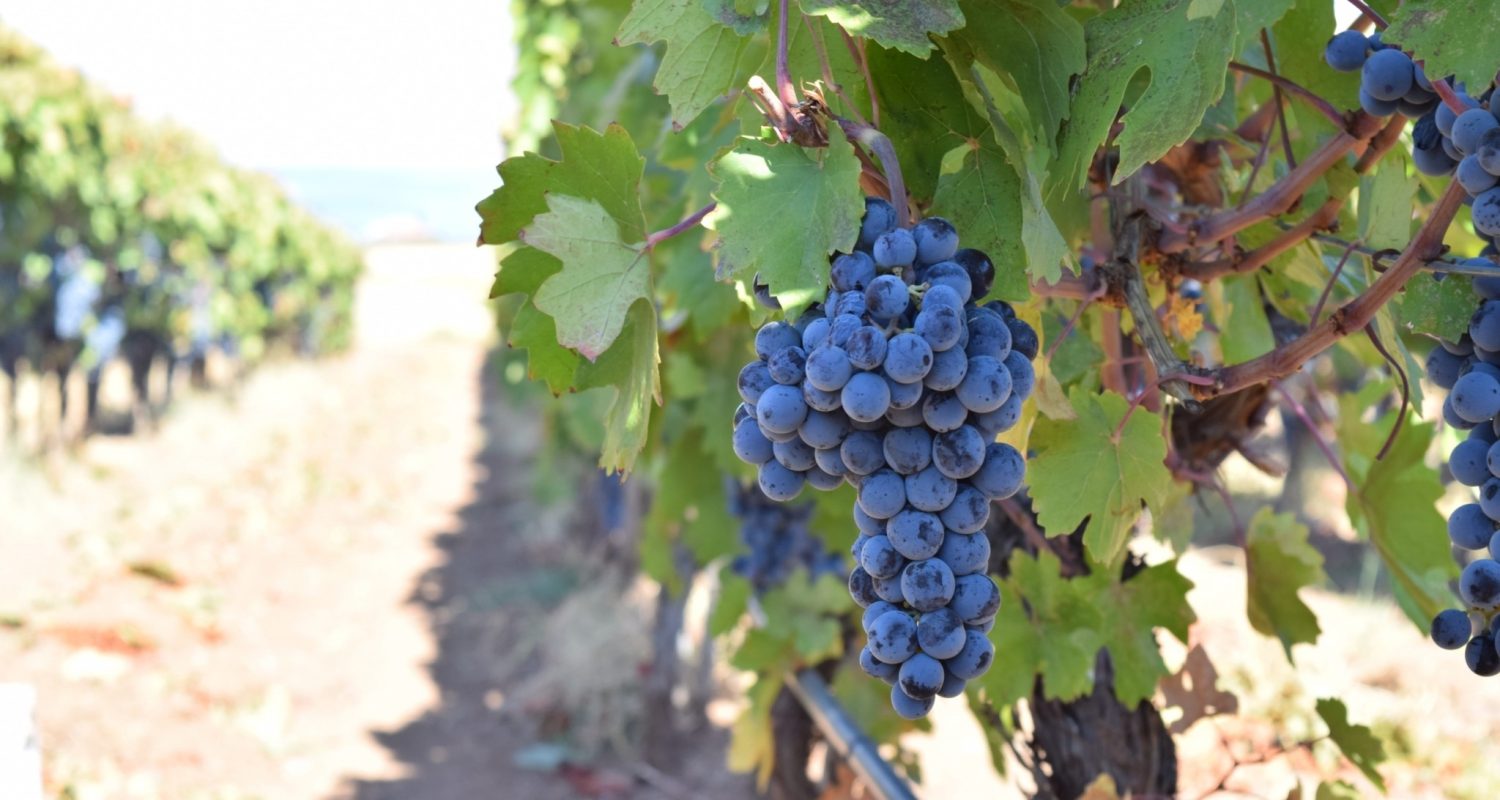
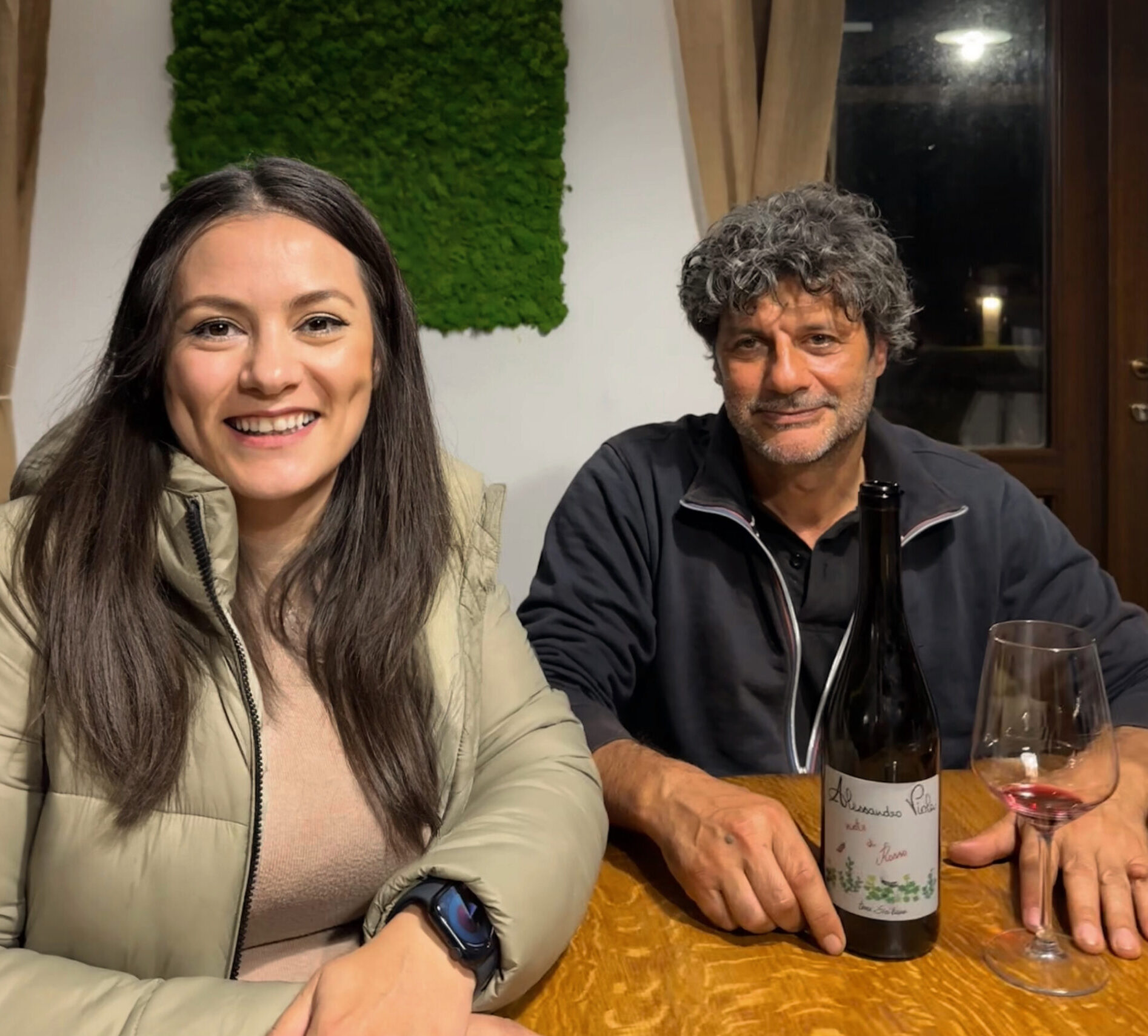
Until evening, and until Alessandro returned home, we spent time at a seaside restaurant in Castellammare del Golfo. And then, driven by curiosity, I found myself late at night at the door of a wine producer, at the foot of Mount Bonifato. Alessandro Viola and his wife Lucia welcomed us into their home. The winery was just beneath the house. The full moon above, the vineyards beside us. Wine was right in the middle of life.
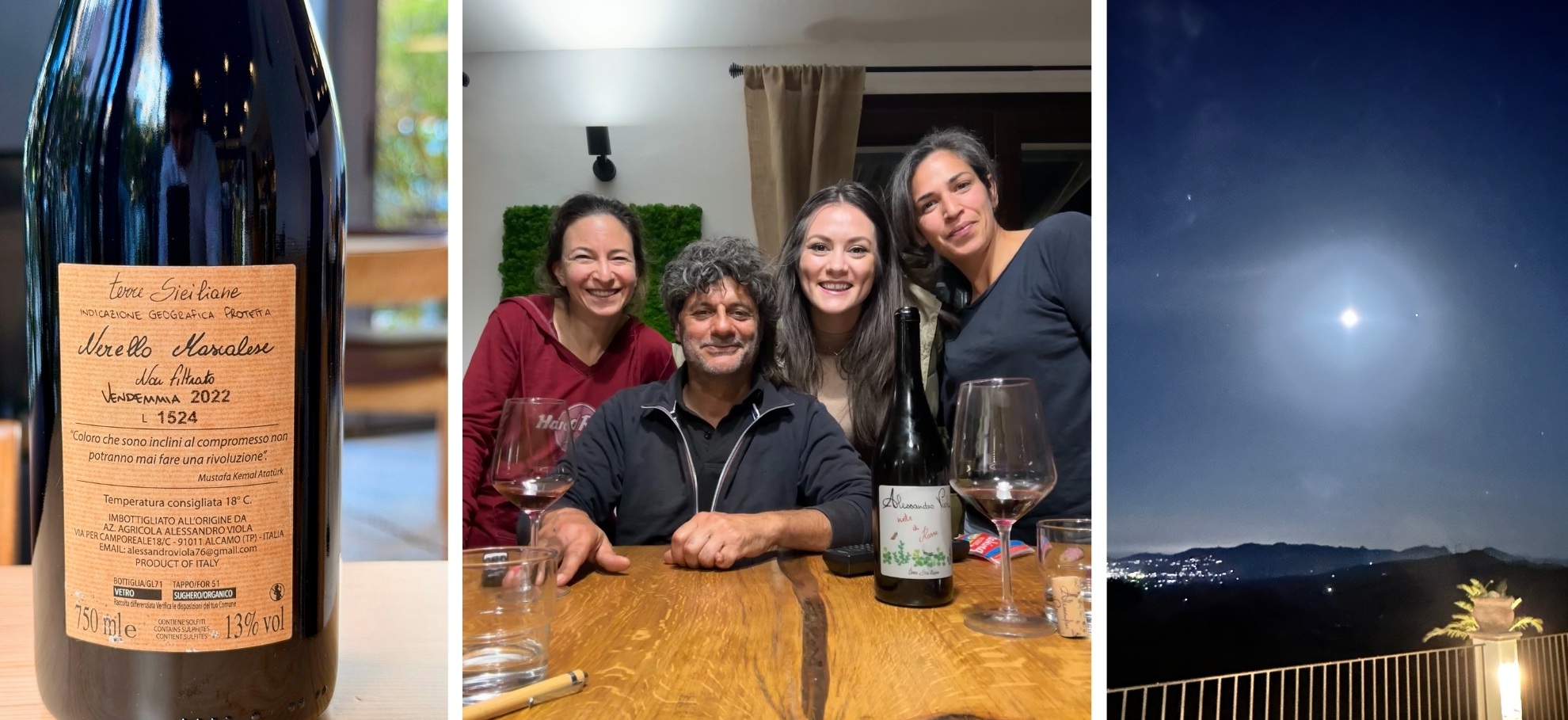
After a brief tour of the winery, we went upstairs. Bottles were opened, a few things were added to the table. We spoke about where we had come from, the producers we had visited, Turkish winemaking… And finally, it was time for the question I had been waiting to ask: “Why did you choose to include a quote by Mustafa Kemal Atatürk on your wine?”
It was not about admiration for Mustafa Kemal Atatürk. For Alessandro, that sentence was not merely a historical quote; it was a manifesto. For him, natural winemaking is not a “trend” or a flexible definition. It is not something that can be pursued through half measures. It does not allow for leaving doors half open. The moment you choose to compromise or take a step back, the whole idea shifts into something else. And that is precisely why that sentence became a clear framework for expressing his philosophy.
Of course, when Mustafa Kemal Atatürk spoke these words, he was referring to a much broader historical context. But some ideas resonate across time and space in unexpected ways. That is exactly what happened here. He had spoken these words on January 16, 1923, in İzmit, during a meeting with journalists, before the Republic had even been declared. It was a moment in which he articulated the determination with which a new country would be built. Today, January 16 is still remembered as “Press Honor Day.”
“İdare-i maslahatçılar esaslı inkılap yapamaz. Bugünkü sefalet ve rezalet içinde esasen kimseyi memnun etmeye imkân yoktur. Yurt imar edildiği gün, millet zengin olduğu zaman herkes memnun olur.”
Reading these words through the back label of a wine in Sicily was, for me, both strange and deeply powerful. Alessandro Viola had chosen this sentence as a clear expression of his own production philosophy. Today, natural wine may attract more attention worldwide. But for those who embarked on this path years ago, it was far from easy. There were not many who understood it, nor many who sought it out. Selling these wines was not easy at all.
Even today, Alessandro’s wine Sinfonia di Rosso reaches wine lovers with the same label. Because some people do not only want to tell you about their wine, but about where they stand. In the wine world, a producer can tell us everything we want to hear. But sometimes, we have to decide what it is that we are looking for. Perhaps that is why, sometimes, we are not just drinking a wine. We are embracing a choice, and finding where we belong.
And sometimes, the whole journey begins the moment we turn a bottle around and read the label.